
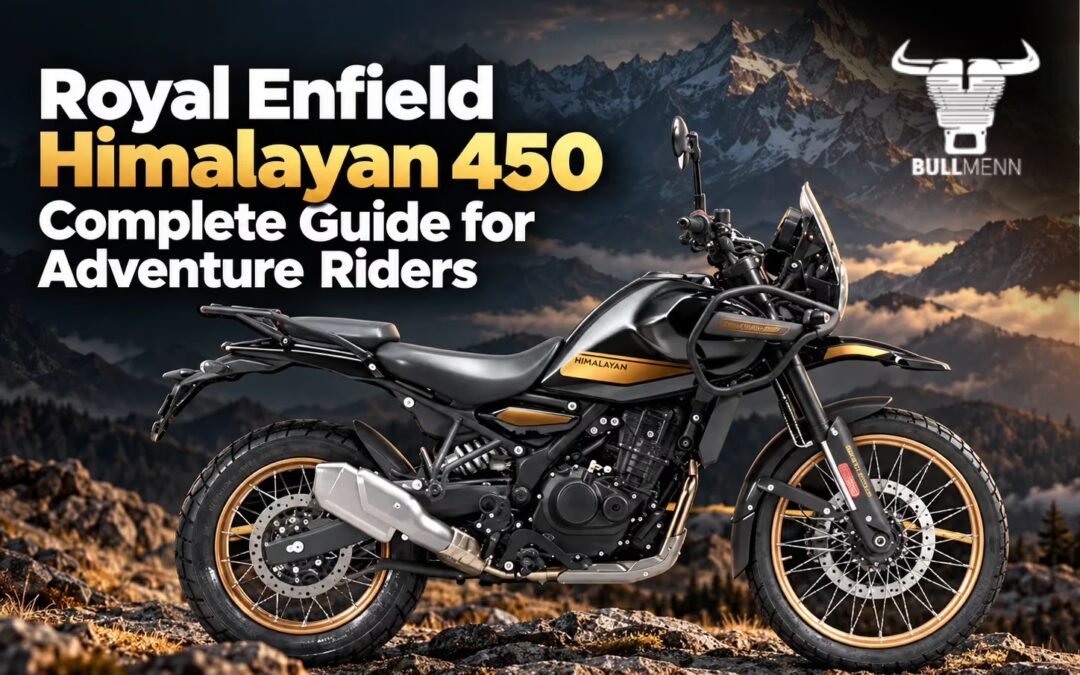
Adventure riding is not simply about riding a motorcycle from one destination to another. It is about the freedom to leave the familiar roads behind, explore challenging surfaces, travel long distances and experience places that cannot always be reached by a conventional road motorcycle. This is exactly where the Royal Enfield Himalayan 450 makes its strongest case. Designed as an adventure-focused motorcycle, it combines a capable 450cc engine with long-travel suspension, high ground clearance, a 21-inch front wheel, comfortable ergonomics and a strong road presence. It is equally comfortable being used for highway touring, rough roads and everyday riding, making it an interesting choice for riders who want one motorcycle that can handle different types of journeys.
Royal Enfield Himalayan 450: An Adventure Motorcycle Built for Exploration
The Royal Enfield Himalayan 450 is designed around a simple idea: the journey should not have to stop when the road becomes difficult. Its adventure-oriented chassis, long suspension travel and high ground clearance give the motorcycle the ability to handle broken roads, potholes, gravel sections and light off-road terrain while still remaining practical on normal roads. Unlike a motorcycle designed primarily for city commuting, the Himalayan 450 feels more purposeful when it is taken on a longer ride. Its upright riding position gives the rider good visibility and control, while the overall design provides enough space for luggage and touring equipment. This combination makes it suitable for riders who see their motorcycle not just as daily transport but as a machine for exploration and long-distance travel.
Engine and Performance
At the heart of the Himalayan 450 is a 450cc single-cylinder liquid-cooled engine that produces around 40 bhp and is paired with a six-speed gearbox. The engine provides a strong balance between low-speed control and highway performance, which is particularly important for an adventure motorcycle. At lower revs, it has enough torque to make slow riding over rough surfaces manageable, while above approximately 3,000 rpm the engine becomes noticeably more responsive and provides the performance required for highway cruising and overtaking. The motorcycle can be ridden calmly when covering long distances or pushed harder when the road opens up, giving it a broad range of usable performance. There can be some noticeable vibration through certain parts of the rev range, but the overall engine character remains strong and flexible enough for both touring and adventure riding.
Six-Speed Gearbox and Assist-and-Slipper Clutch
The six-speed gearbox works well with the engine and gives the Himalayan 450 the flexibility needed for different riding conditions. Lower gears are useful when riding slowly through traffic, climbing uneven surfaces or negotiating technical sections, while the higher gears allow relaxed cruising when travelling on open roads. The assist-and-slipper clutch also makes the motorcycle easier to operate, especially during long rides where repeated clutch operation can become tiring. The gearbox has a relatively smooth and precise feel, which adds to the motorcycle’s touring character. For an adventure motorcycle that may move from slow off-road sections to high-speed highway riding during the same journey, having a gearbox that can handle both extremes is an important advantage.
Suspension and Rough-Road Performance
One of the strongest aspects of the Himalayan 450 is its suspension setup. The motorcycle uses 43 mm USD front forks and a rear monoshock, with approximately 200 mm of suspension travel at both ends. This long-travel setup allows the motorcycle to absorb potholes, broken surfaces, gravel and uneven terrain without constantly transferring harsh impacts to the rider. On poor roads, the suspension keeps the motorcycle composed and gives the rider confidence to continue without having to slow down dramatically for every surface imperfection. The suspension is also one of the reasons the motorcycle feels so capable away from smooth tarmac. Adventure riding often involves unpredictable surfaces, and the Himalayan 450’s suspension gives it the ability to deal with these changes much more naturally than a conventional road-focused motorcycle.
21-Inch Front Wheel and Adventure Handling
The 21-inch front wheel is another important part of the Himalayan 450‘s adventure-focused character. A larger front wheel helps the motorcycle roll over potholes, rocks and uneven surfaces more effectively and reduces the tendency of the front wheel to be deflected by obstacles. What makes the Himalayan 450 interesting is that this adventure-oriented wheel size does not make it feel awkward on normal roads. Once the motorcycle is moving, the weight is managed well by the chassis and suspension, and the motorcycle remains stable during highway riding and predictable through corners. This means riders do not have to choose between road performance and off-road capability to the same extent as they might with a more specialised motorcycle.
Braking Performance and Safety
The Himalayan 450 uses hydraulic disc brakes with dual-channel ABS, providing the braking control expected from a motorcycle of this size and performance. The braking system offers useful feedback and sufficient stopping power for everyday riding and highway touring, although riders should always remember that the motorcycle has considerable mass and therefore requires sensible braking distances, especially when carrying luggage or travelling at higher speeds. Brake-pad wear is another factor that adventure riders should monitor because frequent city traffic, heavy luggage, aggressive riding and repeated off-road use can all increase brake wear. Regular inspection of the brake pads, discs and fluid should therefore form part of normal ownership, particularly before starting a long journey.
Ground Clearance and Fuel Tank Capacity
Adventure motorcycles need enough ground clearance to deal with surfaces that would stop or damage a normal road motorcycle, and the Himalayan 450 provides approximately 230 mm of ground clearance. This gives the motorcycle useful clearance when travelling over rocks, deep potholes, uneven roads and other obstacles. The 17-litre fuel tank is another important advantage for touring because it gives the rider the ability to cover a substantial distance between fuel stops. Real-world fuel economy naturally depends on riding style, traffic, load, road conditions and speed, with relaxed highway riding generally producing better efficiency than aggressive riding or heavy city traffic. For a rider planning long-distance travel, the combination of a reasonably large tank and efficient highway cruising makes the Himalayan 450 a practical touring machine.
Highway Touring Performance
The Himalayan 450‘s character becomes particularly clear once it is taken onto the highway. The motorcycle feels stable at cruising speeds, and the chassis does a good job of maintaining composure when encountering uneven road surfaces or wind. The engine has enough performance to maintain highway speeds without feeling like it is constantly being pushed to its limit, and the upright riding position gives the rider a commanding view of the road ahead. This makes the motorcycle suitable for long stretches of highway riding before the route eventually changes to rougher terrain. The motorcycle is not simply an off-road machine that can tolerate highways; its road manners make it a genuine adventure touring motorcycle capable of spending a significant amount of time on paved roads.
Long-Ride Experience on the Himalayan 450
A long ride changes the way you understand a motorcycle because small details that may not matter during a short ride become much more noticeable after several hours in the saddle. The Himalayan 450 generally performs strongly on long-distance journeys because of its stable chassis, relaxed engine character, long-travel suspension and upright riding position. Highway stability is one of its biggest strengths, allowing the rider to maintain a comfortable cruising pace without constantly making corrections. The suspension also helps reduce fatigue when the road surface becomes rough, while the large fuel tank reduces the need for frequent fuel stops. However, long-distance touring also highlights areas that riders should prepare for, particularly seat comfort, hydration, luggage arrangement and riding posture. A motorcycle can be mechanically capable of travelling hundreds of kilometres, but the rider also needs to prepare physically and mentally for the journey.
Rider and Pillion Comfort
The riding position of the Himalayan 450 is naturally suited to adventure touring, with an upright posture that provides good control and visibility. The suspension contributes significantly to comfort because it absorbs road imperfections instead of transferring every bump directly to the rider. However, seat comfort is subjective and can vary from rider to rider. During shorter journeys the seat may feel perfectly acceptable, while extended rides can reveal pressure points or discomfort caused by the shape and firmness of the seat. Pillion comfort also deserves attention, particularly when planning long-distance rides with a passenger. Riders who regularly travel several hundred kilometres in a day may benefit from a touring-oriented seat or suitable seat modification to improve long-term comfort rather than simply relying on the standard setup.
City Riding and Everyday Use
Although the Himalayan 450 is capable of handling city roads, urban riding is not necessarily where its biggest strengths are found. Its approximately 196 kg weight can be noticeable when maneuvering the motorcycle at very low speeds, moving it while stationary or navigating tight spaces. The motorcycle’s physical size also requires some adjustment for riders who are used to smaller commuter motorcycles. Once moving, however, the weight is managed considerably better and the motorcycle remains practical for everyday use. The important question is therefore how much city riding you actually do. If your motorcycle is primarily used for short commutes through crowded roads, a smaller and lighter motorcycle may be more convenient. If city riding is only one part of a lifestyle that also includes highway trips, weekend rides and adventure touring, the Himalayan 450 becomes much more attractive.
Off-Road Capability
The Himalayan 450 is built to leave the pavement behind, and its combination of long-travel suspension, 21-inch front wheel, 17-inch rear wheel, high ground clearance and adventure-oriented chassis gives it strong off-road ability. It can handle gravel, broken roads, dirt tracks and uneven surfaces with confidence, while the suspension allows the motorcycle to maintain control when the terrain becomes rough. The upright riding position also makes it easier for riders to stand on the footpegs when required and use their body weight to control the motorcycle. However, the motorcycle’s weight should not be ignored. Around 196 kg is substantial when riding technical terrain, especially if the motorcycle falls and needs to be lifted. The Himalayan 450 is therefore particularly well suited to adventure touring and mixed-terrain riding rather than being treated as a lightweight competition off-road motorcycle.
Handling and Weight Management
The Himalayan 450 can feel heavy when it is stationary, but the character changes once the motorcycle begins moving. The chassis, suspension and weight distribution work together to make the motorcycle easier to manage than its specifications might initially suggest. On highways, the weight contributes to stability and gives the motorcycle a planted feel. On rough roads, the suspension helps keep the chassis composed, while the large front wheel helps the motorcycle roll over obstacles. Riders who are new to adventure motorcycles should spend time practising low-speed turns, controlled braking, standing riding and maneuvering before attempting difficult terrain. Learning how to manage the motorcycle’s weight is an important part of getting the best out of the Himalayan 450.
TFT Display, Connectivity and Navigation
The Himalayan 450 features a digital display with smartphone connectivity and navigation-related functions, adding useful technology to an otherwise mechanically focused motorcycle. Riders can connect a smartphone through the appropriate application and access connected features such as navigation and music controls. The system is useful, particularly for riders who regularly travel unfamiliar routes, but the experience may not always be completely seamless. One issue highlighted during testing is that navigation information can disappear when the connected phone becomes locked or enters a power-saving state. The motorcycle’s USB charging facility is therefore useful during long journeys, and riders who depend heavily on navigation may still prefer a dedicated phone mounted securely on the motorcycle. For serious touring, having a reliable navigation backup is always a sensible approach.
Headlight and Night Riding
Lighting becomes particularly important for adventure riders because long journeys do not always finish before sunset. The standard headlight provides useful illumination, but the source material identifies highway night riding as an area where additional lighting could be beneficial. Riders who regularly travel after dark may consider suitable auxiliary lights or fog lights to improve visibility, provided they are installed correctly and used responsibly. Good lighting is not only about seeing farther; it also helps the rider identify potholes, road edges, animals and unexpected obstacles earlier. Before every night ride, riders should also ensure that the headlight, brake light, indicators and auxiliary lights are functioning correctly.
Tubeless Tyres and Long-Distance Practicality
For adventure riders, tyre choice is more than a matter of appearance because a puncture in a remote area can quickly turn into a serious inconvenience. The availability of a tubeless tyre option can make puncture management more practical, particularly for riders who frequently travel long distances. Tubeless systems can often be repaired without removing the wheel or dealing with an inner tube, making them particularly useful during touring. Riders should still carry a proper puncture repair kit and understand how to use it before setting out on a remote journey. Tyre pressure should also be checked before every major ride because incorrect pressure can affect handling, fuel efficiency, tyre wear and off-road grip.
Build Quality and Durability
The Himalayan 450 has a substantial and robust feel that suits the adventure category. The chassis and major mechanical components are designed to handle the demands of long-distance riding and rough terrain, and long-term testing described in the source material showed the motorcycle continuing to perform well after demanding use. The standard bash plate also demonstrated good resistance to impacts and rough riding. At the same time, adventure riding naturally exposes a motorcycle to dust, mud, water, scratches and occasional impacts, so owners should expect some cosmetic wear over time. Riders who regularly travel off-road can consider additional protection for the engine, fuel tank, radiator, hand controls and other exposed components to keep the motorcycle better protected.
Air Filter and Dusty Riding Conditions
Air-filter maintenance becomes especially important when the motorcycle is regularly used on dusty roads. The airbox design places the intake relatively high, which is useful when travelling through wet or muddy conditions, but extended riding in very dusty environments can still allow fine dust to reach the airbox. Long-term testing found some dust inside the airbox after demanding use, highlighting why riders who frequently travel through dusty terrain should inspect the filter more regularly rather than relying only on the normal service interval. A higher-quality or suitable oiled foam filter can be considered for riders who spend significant time in severe dust conditions. Keeping the air filter clean is essential because restricted or contaminated airflow can affect engine performance and, over time, engine protection.
Maintenance and Service Requirements
A motorcycle designed for adventure riding needs consistent maintenance because it can be exposed to conditions that ordinary road motorcycles may rarely experience. Engine oil, oil filters, air filters, coolant, brake components, chain condition, tyre condition, wheel spokes, suspension components and electrical connections should all be checked regularly. Chain maintenance becomes particularly important after riding through mud, dust or water because contamination can accelerate wear. Riders should follow the official service schedule for their motorcycle and avoid treating the service interval as the only time the motorcycle needs inspection. A quick check before a long journey can identify loose fasteners, low tyre pressure, worn brake pads, loose spokes or chain problems before they become major issues on the road.
Long Ride Preparation: What Riders Should Do Before Leaving
Preparing for a long ride should begin before the morning you plan to leave. Packing luggage in advance allows you to check whether everything fits properly and whether the weight is distributed evenly across the motorcycle. Heavy items should be positioned carefully so that they do not affect the motorcycle’s balance or handling, and every luggage strap should be secured so that nothing can move during the ride. The motorcycle itself should receive a basic inspection covering tyres, brakes, chain, engine oil, coolant, lights and electrical functions. The fuel tank should ideally be filled before departure rather than assuming that a fuel station will always be available at the required time. Riders should also prepare navigation in advance, charge their communication devices, carry emergency contacts and ensure that their riding gear is ready. Good preparation reduces unnecessary stress and allows the rider to concentrate on the road once the journey begins.
Staying Comfortable During a Long Ride
The motorcycle is only one part of a successful long-distance ride; the rider’s physical condition matters just as much. Spending several hours continuously seated can lead to stiffness, fatigue and reduced concentration, so regular breaks should be treated as part of the journey rather than as wasted time. Riders should drink water regularly and consider suitable electrolytes during long rides in hot conditions, particularly when sweating heavily. When stopping, it is useful to get off the motorcycle and walk for a few minutes instead of immediately sitting somewhere else. Gentle movement and stretching can help reduce stiffness in the hips, legs and lower back. Riders who already have persistent back pain or another physical condition should take appropriate professional advice before attempting an unusually long motorcycle journey.
Essential Long-Ride Checklist
Before starting a long adventure ride, inspect the motorcycle carefully rather than assuming that everything is fine because it was recently serviced
Long-Ride Motorcycle Checklist
- ☐ Check engine oil level
- ☐ Check coolant level
- ☐ Check brake fluid
- ☐ Inspect brake pads
- ☐ Check tyre pressure
- ☐ Inspect tyre condition
- ☐ Check chain tension
- ☐ Lubricate the chain
- ☐ Test headlights
- ☐ Test indicators
- ☐ Check brake light
- ☐ Test horn
- ☐ Check battery condition
- ☐ Check auxiliary/fog lights
- ☐ Securely mount all luggage
- ☐ Make sure luggage straps cannot reach the wheels, chain or exhaust
- ☐ Carry a puncture repair kit
- ☐ Carry basic tools
- ☐ Carry chain lubricant
- ☐ Carry charging cables
- ☐ Carry a power bank
- ☐ Carry basic first-aid supplies
- ☐ Keep insurance information accessible
- ☐ Keep roadside assistance contact details
- ☐ Save important emergency contacts
- ☐ Inform someone you trust about your route
Final check: Do not rely only on a recent service. Give the motorcycle a complete inspection before starting the ride.
Essential Riding Gear for Adventure Touring
Proper riding gear becomes increasingly important as the distance and riding conditions become more demanding. A good helmet should fit correctly and provide adequate protection without causing excessive fatigue. Riding gloves protect the hands from weather, wind and injury, while a proper motorcycle jacket and riding trousers provide protection against abrasion and impacts. Adventure-oriented riding gear should ideally include appropriate protection for the shoulders, elbows, back, hips and knees. Riding boots with ankle protection are also strongly recommended because the feet and ankles are particularly vulnerable during a fall. During hot weather, ventilated protective gear can help improve airflow while still providing protection. The objective should not simply be to look like an adventure rider but to remain protected and comfortable throughout the entire journey.
Who Should Buy the Himalayan 450?
The Himalayan 450 makes the most sense for riders who genuinely intend to use its adventure-touring capabilities. It is a strong choice for someone who enjoys highway touring, wants to explore rough roads, plans long-distance motorcycle trips and wants a motorcycle capable of handling both paved and unpaved surfaces. Its high ground clearance, long-travel suspension and adventure-oriented ergonomics make it particularly useful for riders who do not want their journey to end when the road becomes rough. At the same time, buyers should understand that the motorcycle’s weight, size and running requirements make it different from a lightweight commuter. The right question is not whether the Himalayan 450 is a good motorcycle in isolation, but whether its capabilities match the rider’s actual lifestyle and intended usage.
Himalayan 450: Touring Machine or City Motorcycle?
The Himalayan 450 can handle city riding, but its personality becomes much clearer when it is used for touring. In congested traffic, the motorcycle’s weight and physical dimensions can sometimes feel excessive, especially during frequent low-speed maneuvering. On the highway, however, those same characteristics become advantages because the weight contributes to stability and the suspension provides comfort over changing road surfaces. Once the road turns rough, the long suspension travel and high ground clearance become even more valuable. This makes the Himalayan 450 better understood as an adventure touring motorcycle that can be used in the city rather than a city motorcycle that simply has an adventure appearance.
Why Professional Sales and Service Support Matters
Buying an adventure motorcycle is only the beginning of ownership, particularly for riders who plan to use their motorcycle for long-distance travel. Reliable sales guidance and after-sales service can make a significant difference because adventure motorcycles require proper maintenance and owners may need advice about accessories, service intervals, tyres, luggage and long-distance preparation. Bullmenn Motors provides sales and service support for Royal Enfield motorcycles, giving customers a dedicated place to explore the Himalayan 450, understand its features and discuss ownership requirements. For riders considering the Himalayan 450, visiting Bullmenn Motors and discussing the motorcycle with the sales and service team can be a useful step before making a purchase, especially if the motorcycle will be used for regular touring or adventure riding.
Final Verdict: Is the Himalayan 450 Worth Considering?
The Royal Enfield Himalayan 450 brings together many of the qualities adventure riders look for in a single motorcycle. Its 450cc engine provides strong and flexible performance, the six-speed gearbox makes highway riding relaxed, the long-travel suspension handles rough surfaces extremely well, the 21-inch front wheel improves confidence away from smooth roads and the high ground clearance allows the motorcycle to travel over terrain that would challenge many road-focused motorcycles. It also offers a substantial fuel capacity, useful digital features and a comfortable upright riding position for long journeys. At the same time, buyers should consider the motorcycle’s weight, seat comfort, certain limitations of the navigation system, engine vibration and the importance of regular maintenance. The Himalayan 450 is not a motorcycle that should be purchased purely because it looks adventurous. It makes the most sense when the rider genuinely intends to explore, travel long distances and experience different types of roads. For those riders, the Himalayan 450 can be a capable and versatile adventure companion, and with proper preparation, regular servicing and the right touring setup, it has the ability to turn a normal motorcycle journey into a genuine adventure.
Planning Your Next Adventure Ride?
Whether you’re buying your first Himalayan 450 or preparing your motorcycle for the next long ride, Bullmenn Motors is here to help with Royal Enfield sales and service support.
Enquire About Himalayan 450 | Book a Service